

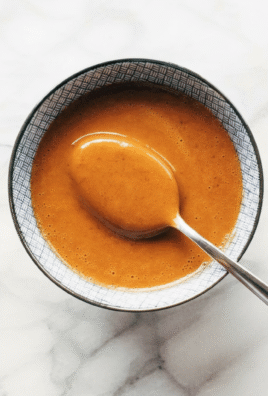
This peanut sauce recipe uses 6 simple ingredients you probably have right now – peanut butter, soy sauce, lime juice, honey, garlic, and ginger. Mix everything in one bowl with a whisk. No blender needed. The sauce is ready in 5 minutes and works as a dip for spring rolls, a dressing for salads, or a topping for noodles and grilled chicken. I make a fresh batch every week because my family puts it on everything.
I avoided making peanut sauce for years. Every recipe I found online called for obscure ingredients I didn’t have – tamarind paste, coconut milk, lemongrass, galangal. Some recipes required simmering the sauce on the stove for 30 minutes. Others needed a food processor or blender. I just wanted something simple that tasted good.
Then I went to my favorite Thai restaurant and asked the owner how she made her peanut sauce. She laughed and said, “Just peanut butter, soy sauce, little bit sugar, little bit lime. Mix together. That’s it.” I went home that night and tried it. She was right. The simplest version tasted better than any complicated recipe I’d attempted.
Now this peanut sauce recipe lives in my weekly meal prep routine. I make it every Sunday and keep it in a jar in my fridge. My kids dip carrots and cucumbers in it for snacks. My husband drizzles it over chicken and rice. I toss it with cold noodles for quick lunches. One batch lasts our family of four about five days, though sometimes it disappears faster because we eat it straight off a spoon.
The best part? You don’t need any special equipment or hard-to-find ingredients for this peanut sauce recipe. Just a bowl, a whisk, and six pantry staples. If you can stir, you can make this sauce.

What Are the Ingredients of Peanut Sauce Recipe?
A basic peanut sauce recipe contains six core ingredients: peanut butter (the base), soy sauce (for saltiness), an acid like lime juice or rice vinegar (for tang), a sweetener such as honey or maple syrup (for balance), fresh garlic (for punch), and fresh ginger (for brightness). You thin the mixture with water to reach your desired consistency – thicker for dipping, thinner for drizzling.
Let me break down why each ingredient matters in this peanut sauce recipe and what it actually does.
Peanut butter is the foundation. You want smooth, natural peanut butter with just peanuts and maybe salt in the ingredient list. Avoid the kind with added oils and sugars – they make the sauce taste artificial and overly sweet. I use brands like Smuckers Natural or Trader Joe’s organic peanut butter. The natural oil separation doesn’t matter here because you’ll be mixing it anyway.
Some people ask if they can use crunchy peanut butter for this peanut sauce recipe. Sure, if you like texture. I prefer smooth because it creates a silkier sauce, but chunky works fine and adds little bits of peanut throughout.
Soy sauce brings the salt and umami. This is what makes peanut sauce savory instead of dessert-like. I use low-sodium soy sauce so I can control the saltiness better. Regular soy sauce works too – just use a bit less. If you’re gluten-free, swap in tamari or coconut aminos. They taste slightly different but still delicious in this peanut sauce recipe.
Lime juice adds brightness and cuts through the richness. Fresh lime juice tastes way better than bottled, but I won’t judge you if you use bottled in a pinch. You need that acidic pop to balance the fatty peanut butter. Some recipes use rice vinegar instead, which also works great. I keep both on hand and use whichever I have more of.
Honey or maple syrup balances everything out. Peanut sauce needs sweetness to round out the salty and sour notes. I usually use honey because it dissolves easily and doesn’t separate. Maple syrup works just as well and makes the sauce vegan. Brown sugar or white sugar work too if that’s what you have – just make sure it dissolves completely.
Fresh garlic gives the sauce personality. You want the sharp, pungent kick that only fresh garlic provides. Garlic powder doesn’t cut it here. One or two cloves, grated on a microplane or minced super fine, transform this peanut sauce recipe from good to incredible. Don’t skip it.
Fresh ginger adds warmth and complexity. Like garlic, fresh ginger matters. That zingy, slightly spicy flavor can’t be replicated with dried ginger powder. Peel a small knob of ginger and grate it on a microplane. You only need about half a teaspoon, but that little bit makes such a difference in this peanut sauce recipe.
Water is your consistency control. The sauce starts out really thick – almost like paste. You add water one tablespoon at a time until you reach the consistency you want. For a dipping sauce, I add about 2-3 tablespoons. For a salad dressing, I use 4-6 tablespoons to make it drizzly.
Some recipes add sesame oil, sriracha, or coconut milk to this peanut sauce recipe. Those are nice extras but not necessary. I keep mine simple with the six core ingredients, then customize with add-ins depending on what I’m using the sauce for.
My kids dip everything in this sauce – carrots, cucumbers, even leftover grilled chicken. Speaking of chicken, this peanut sauce pairs incredibly well with our Philly Cheesesteak Recipe. I know that sounds weird, but the tangy sauce cuts through the richness of the melted cheese and beef beautifully. Try drizzling a bit on your next cheesesteak and thank me later.
What Are the 4 Ingredients in Peanut Sauce Recipe for Chicken?
The absolute bare minimum peanut sauce recipe for chicken requires just 4 ingredients: peanut butter, soy sauce, a sweetener like honey, and water to thin it out. This stripped-down version still delivers that classic sweet-salty-nutty flavor that makes chicken taste incredible, whether you’re grilling, baking, or pan-frying.
I discovered this four-ingredient hack when I was making chicken satay one weeknight and realized I was missing half the ingredients for my usual peanut sauce recipe. I had peanut butter, soy sauce, honey, and water. That was it. I mixed them together anyway, tasted it, and thought “this actually works.”
Here’s how the four-ingredient version breaks down for this peanut sauce recipe:
Half a cup of peanut butter forms your base. Use natural peanut butter for the best flavor. The oil that separates on top? Mix it back in before measuring.
Three tablespoons of soy sauce brings the salt and that deep umami taste that makes everything savory. Low-sodium works best so you can adjust salt to your taste.
Two tablespoons of honey adds the sweetness you need to balance the salty soy sauce. You can use more or less depending on how sweet you like your sauce.
Four to six tablespoons of warm water thin the mixture down to a sauce consistency instead of a paste. Start with four tablespoons and add more if you want it thinner.
Whisk everything together in a bowl until smooth. That’s literally it. You have peanut sauce for chicken.
Now, is this four-ingredient version as good as the full peanut sauce recipe with lime juice, garlic, and ginger? No. Those extra ingredients add layers of flavor that make the sauce more complex and interesting. But when you’re short on time or ingredients, this simplified version absolutely gets the job done. Your chicken will still taste great.
I use this shortcut version for quick weeknight dinners. If I’m meal prepping or making something special, I take the extra two minutes to add the lime juice, garlic, and ginger. But for a Tuesday night when the kids are hungry and I need dinner on the table fast? Four ingredients works perfectly fine for this peanut sauce recipe.
The key is getting the ratios right. Too much peanut butter makes it paste-like and hard to mix with chicken. Too much soy sauce makes it too salty. Too much honey makes it taste like dessert. The measurements I gave you above create a balanced sauce that coats chicken beautifully without overpowering it.
What Are Some Common Mistakes When Making Peanut Sauce Recipe ?
After making this peanut sauce recipe dozens of times and watching friends attempt it, I’ve noticed the same mistakes keep happening. Here’s what usually goes wrong and how to avoid it.
Using old, separated peanut butter without mixing it first. Natural peanut butter separates. The oil floats to the top and the thick paste sinks to the bottom. If you scoop from the top, you get all oil and your sauce turns out runny and greasy. If you scoop from the bottom, you get thick paste that won’t mix smoothly. Always stir your peanut butter jar completely before measuring for this peanut sauce recipe. Get that oil incorporated back into the paste. Takes 30 seconds but makes a huge difference.
Adding all the water at once instead of gradually. This is the number one mistake with this peanut sauce recipe. People dump all the water in at the beginning, and then they can’t control the consistency. The sauce goes from paste to soup in seconds. Add water one tablespoon at a time. Whisk it in completely. Check the consistency. Add more if needed. You can always thin sauce out, but you can’t thicken it back up without adding more peanut butter.
Not using fresh garlic and ginger. Garlic powder and ground ginger do not taste the same as fresh. They just don’t. The powdered versions are flat and one-dimensional. Fresh garlic gives you that sharp, pungent bite. Fresh ginger gives you that zingy warmth. Spending two minutes to grate fresh garlic and ginger elevates this peanut sauce recipe from “pretty good” to “wow, this is restaurant quality.”
Forgetting to taste and adjust. Every brand of peanut butter and soy sauce tastes slightly different. Some are saltier, some are sweeter. You have to taste your sauce before you serve it. Too salty? Add more honey and a squeeze of lime. Too sweet? Add more soy sauce. Not enough punch? Grate in more garlic. Making this peanut sauce recipe isn’t about following exact measurements – it’s about tasting as you go and adjusting to your preferences.
Using sauce straight from the fridge without letting it warm up. Peanut sauce thickens considerably when cold. If you pull it straight from the fridge and try to use it, it’ll be stiff and hard to drizzle or mix. Let it sit at room temperature for 10-15 minutes before using. Or microwave it for 10-15 seconds and stir. It’ll thin back out to the perfect consistency for this peanut sauce recipe.
Storing it in a wide-mouth container instead of a squeeze bottle. This isn’t really a mistake that ruins the sauce, but it makes using it less convenient. I started storing my peanut sauce recipe in a plastic squeeze bottle (like the kind ketchup comes in). Now I can drizzle it perfectly over bowls and salads without making a mess. Game changer for meal prep.
Expecting it to taste exactly like restaurant peanut sauce. Most Thai and Vietnamese restaurants use commercial peanut sauce bases or add ingredients like coconut milk, tamarind, fish sauce, or curry paste. Their sauces taste different because they ARE different. This peanut sauce recipe is a simplified home version that focuses on the core flavors. It’s delicious and versatile, but it won’t taste identical to every restaurant you’ve tried. That’s okay. It’s still really good.
Not making enough. This is my most frequent mistake. I make one batch and it’s gone in two days because everyone in my house keeps finding excuses to use it. Now I automatically double this peanut sauce recipe every time I make it. Trust me – you’ll want extra.
What is Vietnamese Peanut Sauce Recipe Made Of?
Vietnamese peanut sauce (called tương đậu phộng or nước chấm đậu phộng) contains ground roasted peanuts, hoisin sauce, peanut butter, water, minced garlic, fresh chili or sriracha, and sometimes a touch of sugar. The texture is thicker and chunkier than Thai peanut sauce, with visible bits of crushed peanuts throughout. It’s served with Vietnamese spring rolls (gỏi cuốn) and grilled meats.
The Vietnamese version of this peanut sauce recipe differs from Thai versions in some key ways. Let me break down what makes it unique.
Hoisin sauce is a defining ingredient. Most Vietnamese peanut sauces include hoisin, which adds a sweet, fermented, slightly tangy flavor you don’t get in Thai versions. Hoisin is made from fermented soybeans, garlic, vinegar, sugar, and spices. It gives Vietnamese peanut sauce a deeper, more complex sweetness compared to the honey or sugar used in simpler versions of this peanut sauce recipe.
The texture is chunkier. Vietnamese cooks often start with whole roasted peanuts that they crush or grind coarsely, rather than using smooth peanut butter. This creates a sauce with texture – little bits of peanut suspended throughout. Even when they use peanut butter as a base (which many home cooks do for convenience), they’ll often stir in crushed roasted peanuts at the end for authenticity.
It’s less sweet overall. While this peanut sauce recipe balances sweet, salty, and tangy fairly equally, Vietnamese versions lean more savory. They use less sugar and rely on the natural sweetness from hoisin and peanuts. The result tastes more grown-up and sophisticated, less like a dessert sauce.
Fresh chilies or chili oil add heat. Vietnamese peanut sauce often has visible flecks of red chili throughout. Some cooks add fresh minced Thai chilies. Others use chili-garlic sauce or a drizzle of chili oil. The heat level varies, but there’s usually at least a subtle warmth to cut through the richness.
Here’s a basic Vietnamese-style variation of this peanut sauce recipe if you want to try it:
Mix half a cup of peanut butter with three tablespoons of hoisin sauce, two tablespoons of water, one tablespoon of soy sauce, two grated garlic cloves, one teaspoon of sriracha, and a teaspoon of sugar. Thin with more water to your desired consistency. Stir in two tablespoons of crushed roasted peanuts at the end. That’s Vietnamese peanut sauce.
The traditional way to serve this with Vietnamese spring rolls is to put the sauce in a small dish and place it on everyone’s plate. You dip each roll directly into your personal sauce dish. In Vietnamese restaurants, they often garnish the sauce with extra crushed peanuts on top and sometimes a drizzle of chili oil for presentation.
One note: Vietnamese peanut sauce is almost always served at room temperature or slightly warm, never cold straight from the fridge. The flavors taste more pronounced when the sauce isn’t cold, and the texture stays smooth instead of stiffening up.

How to Make This Peanut Sauce Recipe Step-by-Step
Making this peanut sauce recipe takes about five minutes total. No special equipment needed. Here’s exactly how I do it every single time.
Get your ingredients ready. Pull out your peanut butter, soy sauce, lime, honey, garlic, and fresh ginger. This is a good time to stir your peanut butter jar if you’re using natural peanut butter. Get that oil mixed back into the solids so you’re measuring consistent peanut butter instead of separated paste.
Measure the peanut butter into a medium bowl. I use half a cup for this peanut sauce recipe, which makes about one cup of finished sauce. That’s enough for 4-6 servings as a dipping sauce, or enough to dress noodles or salad for 4 people.
Add the liquids. Pour in three tablespoons of soy sauce, juice from one lime (about two tablespoons), and two tablespoons of honey. Don’t stir yet. Just get everything into the bowl.
Grate your garlic and ginger. Use a microplane to grate two garlic cloves and about half a teaspoon of fresh ginger directly into the bowl. If you don’t have a microplane, mince them super fine with a knife. You want them broken down enough that you won’t bite into chunks of raw garlic.
Whisk everything together. Start stirring with a whisk. The peanut butter will seem really stiff and resistant at first. Keep whisking. After about 30 seconds of continuous whisking, the liquids will start breaking down the peanut butter and everything will begin to combine. After a minute, you’ll have a thick paste.
Add water gradually to thin it out. Add one tablespoon of water and whisk it in completely. Add another tablespoon. Keep going until you reach the consistency you want. For a dipping sauce, I stop at 2-3 tablespoons of total water. For drizzling over bowls, I go up to 5-6 tablespoons. You’re looking for something thinner than natural peanut butter but thicker than heavy cream.
Taste and adjust. This is the most important step in this peanut sauce recipe. Stick a clean spoon in there and taste it. What does it need? If it’s too salty, add more honey and lime juice. If it’s too sweet, add more soy sauce. If it tastes flat, it probably needs more lime juice or a bit more garlic. Keep tasting and adjusting until it tastes balanced to you.
Use immediately or store. You can use this peanut sauce recipe right away at room temperature, or transfer it to a jar with a lid and refrigerate it. It’ll thicken up in the fridge, so let it come to room temperature or warm it slightly before using.
That’s it. Five minutes, one bowl, minimal cleanup. The hardest part is waiting to use it because it smells so good.
Ways to Use This Peanut Sauce Recipe
This peanut sauce recipe works in so many different ways. Here are all the places I use it throughout the week.
Spring roll dipping sauce. This is the classic use. Make fresh spring rolls with rice paper, vermicelli noodles, shrimp or tofu, lettuce, and herbs. Serve this sauce on the side for dipping. The cool fresh rolls with the rich nutty sauce is an unbeatable combination.
Salad dressing. Thin the sauce out a bit more with extra water (or use the higher end of the water range when you make it). Drizzle it over any green salad, but it’s especially good on Asian-style salads with cabbage, carrots, edamame, and crispy wontons. Try it on our Philly Cheesesteak recipe for a fusion twist, or use it in place of regular dressing.
Peanut noodles. Cook any noodles you like – soba, rice noodles, ramen, spaghetti. Toss them while still warm with this peanut sauce recipe, thinned slightly with pasta cooking water. Add shredded vegetables, protein of choice, and crushed peanuts on top. This is my go-to quick lunch.
Grilled chicken or steak marinade. Thin the sauce slightly and use it to marinate chicken thighs, chicken breasts, or flank steak before grilling. The sugars caramelize beautifully over high heat. Save some clean sauce for drizzling over the cooked meat.
Satay sauce. Make chicken or beef satay on skewers. Grill or broil them. Serve with this peanut sauce recipe as the classic satay dipping sauce. Garnish with chopped peanuts and cilantro.
Vegetable dip. Cut up raw vegetables – carrots, cucumber, bell peppers, snap peas, broccoli. This sauce makes eating vegetables actually enjoyable. My kids will eat almost any vegetable if there’s peanut sauce involved.
Rice bowl topping. Build a bowl with rice, your protein (grilled chicken, tofu, shrimp), roasted or raw vegetables, and then drizzle this peanut sauce recipe generously over the top. Add sesame seeds and sliced green onions for garnish.
Stir-fry sauce. Add it at the end of cooking a stir-fry. It’ll coat everything and add incredible flavor. You might need to thin it slightly with a splash of water or stock so it distributes evenly.
Sandwich spread. This sounds weird but trust me. Use it in place of mayo or mustard on sandwiches, especially those with grilled vegetables, cucumber, and sprouts.
Buddha bowl dressing. Those trendy bowls with quinoa, roasted sweet potato, kale, chickpeas, and avocado? This peanut sauce recipe makes them taste way better.
Storage and Make-Ahead Tips
This peanut sauce recipe stores really well, which is why I always make it ahead for meal prep.
Refrigerator storage. Transfer the sauce to a jar with a tight-fitting lid. It keeps in the fridge for up to one week, sometimes longer depending on how fresh your ingredients were. The garlic is usually what limits shelf life – the sauce will start tasting sharper and more pungent after about 10 days.
The sauce will thicken when cold. This is completely normal. Peanut butter solidifies in the fridge, so your sauce will go from pourable to thick and scoopable overnight. To fix this, let it sit at room temperature for 15-20 minutes, or microwave it for 10-15 seconds and stir. You can also whisk in a tablespoon or two of water to return it to the original consistency.
Freezing works but isn’t necessary. You can freeze this peanut sauce recipe for up to three months. Freeze it in ice cube trays, then pop the cubes into a freezer bag. Pull out one or two cubes whenever you need sauce. But honestly? It lasts a week in the fridge and takes five minutes to make fresh. I’ve never actually needed to freeze it.
Make it ahead for meal prep. Every Sunday I make a double batch of this peanut sauce recipe along with my other meal prep. Having it ready means I can throw together quick meals all week. Pre-cooked chicken plus vegetables plus peanut sauce equals dinner in 10 minutes.
Separation is normal. If you come back to your sauce after a day or two and there’s a layer of oil floating on top, that’s just the natural peanut oil separating out. Stir it back in. Perfectly fine.
Don’t store it in metal containers. The lime juice and soy sauce are acidic. Store your peanut sauce recipe in glass or plastic containers, not metal. Metal can react with the acids and give your sauce a weird metallic taste.
Substitutions and Variations
This peanut sauce recipe is flexible. Here’s how to adapt it based on what you have or your dietary needs.
Peanut butter alternatives. Use almond butter, cashew butter, or sunflower seed butter if you’re allergic to peanuts or cooking for someone who is. The flavor will be different but still delicious. Almond butter makes a slightly sweeter, milder sauce. Cashew butter is really smooth and neutral. Sunflower seed butter has an earthier taste.
Soy sauce substitutes. Tamari works if you need gluten-free. Coconut aminos work for soy-free or paleo. Both taste slightly less salty than soy sauce, so you might want to add a pinch of extra salt to this peanut sauce recipe.
Sweetener swaps. Maple syrup instead of honey makes it vegan. Brown sugar or white sugar work too – just make sure they dissolve completely. Agave nectar also works fine.
Acid options. Rice vinegar can replace lime juice for a milder tang. Lemon juice works in a pinch, though it tastes less traditional.
Add coconut milk. Swap the water for full-fat coconut milk to make this peanut sauce recipe richer and creamier. This makes it closer to Thai-style peanut sauce.
Add sriracha or chili paste. Stir in a teaspoon or more of sriracha if you like heat. Sambal oelek or chili-garlic sauce also work great.
Add sesame oil. A teaspoon of toasted sesame oil adds nutty depth to this peanut sauce recipe. Don’t overdo it – sesame oil is potent.
Make it thicker. Use less water if you want a thicker dipping consistency. You can always add more later.
Make it thinner. Add more water, lime juice, or even a splash of rice vinegar to make a thinner dressing consistency.
Nutritional Benefits
This peanut sauce recipe actually has some good nutrition going for it, despite being rich and indulgent-tasting.
Peanuts provide protein. You get about 8 grams of protein per quarter-cup of peanut butter. This makes peanut sauce a decent protein boost for vegetarian meals or salads. Research from Harvard Health shows that plant-based proteins like peanuts can support heart health when part of a balanced diet.
Healthy fats. The fats in peanut butter are mostly monounsaturated and polyunsaturated fats – the kind that support cardiovascular health. These fats also help your body absorb fat-soluble vitamins from vegetables you eat with this sauce.
Garlic and ginger offer anti-inflammatory compounds. Both contain bioactive compounds that may help reduce inflammation in the body. Fresh ginger especially has been studied for its anti-inflammatory properties according to WebMD.
No processed ingredients. When you make this peanut sauce recipe from scratch, you know exactly what’s in it. No preservatives, no artificial flavors, no weird additives you can’t pronounce.
Versatile for adding vegetables. Having a delicious sauce like this on hand makes it way easier to eat more vegetables. My kids will eat almost any vegetable if there’s peanut sauce for dipping.
The nutrition does depend on portion size. This sauce is calorie-dense because of the peanut butter, so you don’t need to drown everything in it. A couple tablespoons per serving is plenty to get the flavor you want.
Peanuts are packed with protein and healthy fats that support heart health. Research from Harvard Health shows that regular consumption of peanuts and peanut butter may help reduce the risk of cardiovascular disease when part of a balanced diet.
PrintHow To Make Perfect Peanut Sauce Recipe in 5 Minutes

This peanut sauce recipe takes 5 minutes with 6 ingredients. Creamy and perfect for spring rolls, salads, noodles, and grilled chicken!
- Prep Time: 5 minutes
- Cook Time: 0 minutes
- Total Time: 5 minutes
- Yield: 8 servings 1x
- Category: Sauce
- Cuisine: Asian
Ingredients
1/2 cup natural peanut butter, smooth
3 tablespoons soy sauce, low-sodium preferred
2 tablespoons fresh lime juice, about 1 lime
2 tablespoons honey or maple syrup
2 garlic cloves, grated or minced
1/2 teaspoon fresh ginger, grated
3–6 tablespoons water, for thinning
Optional add-ins:
1 teaspoon sriracha or chili-garlic sauce, for heat
1 teaspoon toasted sesame oil, for depth
2 tablespoons crushed roasted peanuts, for texture
Instructions
Stir your peanut butter jar if using natural peanut butter. Mix that separated oil back into the solids so you’re working with consistent peanut butter.
Add peanut butter to a medium bowl. Measure out 1/2 cup and put it in your mixing bowl.
Add all the other ingredients except water. Pour in the soy sauce, lime juice, and honey. Grate the garlic and ginger directly into the bowl using a microplane or mince them finely with a knife.
Whisk everything together vigorously. Use a whisk and stir constantly. The mixture will look thick and pasty at first. Keep whisking for about 1 minute until everything starts to combine into a thick sauce.
Add water gradually. Add 1 tablespoon of water and whisk it in completely. Add another tablespoon. Keep adding water one tablespoon at a time until you reach your desired consistency. For dipping, stop at 3 tablespoons total water. For drizzling over bowls or salads, go up to 5-6 tablespoons.
Taste and adjust. Use a clean spoon to taste your sauce. Too salty? Add more honey and lime. Too sweet? Add more soy sauce. Needs more punch? Add more garlic or ginger. Adjust to your preferences.
Use immediately or store. Serve right away at room temperature, or transfer to a jar with a lid and refrigerate for up to one week. The sauce will thicken when cold, so let it warm to room temperature or thin with a bit more water before using.
Notes
Peanut butter: Use natural peanut butter with just peanuts and salt. Avoid added oils and sugars.
Consistency: Start with 2-3 tablespoons water for dipping, 5-6 tablespoons for drizzling. Add gradually.
Fresh garlic and ginger: Don’t use powders – fresh makes a huge difference. Grate on microplane for best results.
Storage: Keeps 1 week in fridge. Sauce thickens when cold – let warm to room temperature or thin with water before using.
Substitutions: Use almond butter for peanut allergies. Use tamari for gluten-free. Use maple syrup for vegan.
Make it spicy: Add sriracha or sambal oelek to taste.
Vietnamese-style: Add 3 tablespoons hoisin sauce and 2 tablespoons crushed peanuts.
Serving ideas: Perfect for spring rolls, salads, noodles, rice bowls, grilled chicken, or try it on our Philly Cheesesteak Recipe!
Nutrition
- Calories: 95 kcal
- Sugar: 5g
- Sodium: 280mg
- Fat: 6g
- Carbohydrates: 7g
- Fiber: 1g
- Protein: 4g
Keywords: peanut sauce recipe, easy peanut sauce, homemade peanut sauce, Thai peanut sauce, peanut dipping sauce, quick peanut sauce, 5 minute peanut sauce
Frequently Asked Questions About This Peanut Sauce Recipe
Q1: Can I make this peanut sauce recipe without a whisk?
A: Yes! Use a fork instead. It’ll take a bit longer to get everything smooth, but it works. Just keep stirring patiently and the peanut butter will eventually break down and combine with the liquids.
Q2: Why is my peanut sauce recipe too thick?
A: You didn’t add enough water, or your sauce got cold. Add more water one tablespoon at a time while stirring until it reaches the consistency you want. If it’s cold from the fridge, let it warm to room temperature or microwave it for 10-15 seconds.
Q3: Can I use crunchy peanut butter instead of smooth?
A: Absolutely. Your sauce will have texture from the peanut pieces, which some people really like. The flavor and technique stay exactly the same for this peanut sauce recipe.
Q4: How do I make this peanut sauce recipe spicier?
A: Add sriracha, sambal oelek, chili-garlic sauce, or fresh minced Thai chilies. Start with half a teaspoon and add more until you reach your preferred heat level.
Q5: My peanut sauce tastes too salty. How do I fix it?
A: Add more honey, more lime juice, and a bit more peanut butter to balance out the saltiness. Next time, use low-sodium soy sauce or reduce the amount slightly.
Q6: Can I make this peanut sauce recipe ahead of time?
A: Yes! It’s actually better after sitting for a few hours because the flavors have time to meld together. Make it up to one week ahead and store it in the fridge in an airtight container.
Q7: What’s the difference between Thai and Vietnamese peanut sauce?
A: Thai peanut sauce is usually sweeter and creamier, often made with coconut milk and curry paste. Vietnamese peanut sauce includes hoisin sauce and has a chunkier texture with visible bits of crushed peanuts.
Q8: Can I freeze this peanut sauce recipe?
A: Yes, freeze it in ice cube trays or small containers for up to 3 months. Thaw in the fridge overnight and stir well before using. You might need to add a bit of water to restore the consistency.
Q9: Why does my peanut sauce separate?
A: Natural peanut butter separates because there are no stabilizers. Just stir it back together. If you used very oily peanut butter, you might have too much oil. Try using less oily peanut butter next time or stir your jar really well before measuring.
Q10: What can I serve with this peanut sauce recipe?
A: Spring rolls, satay skewers, raw vegetables, salads, noodles, rice bowls, grilled chicken, tofu, sandwiches, wraps – honestly, it goes with almost everything. Some people even use it as a sandwich spread!
Leave a Comment