

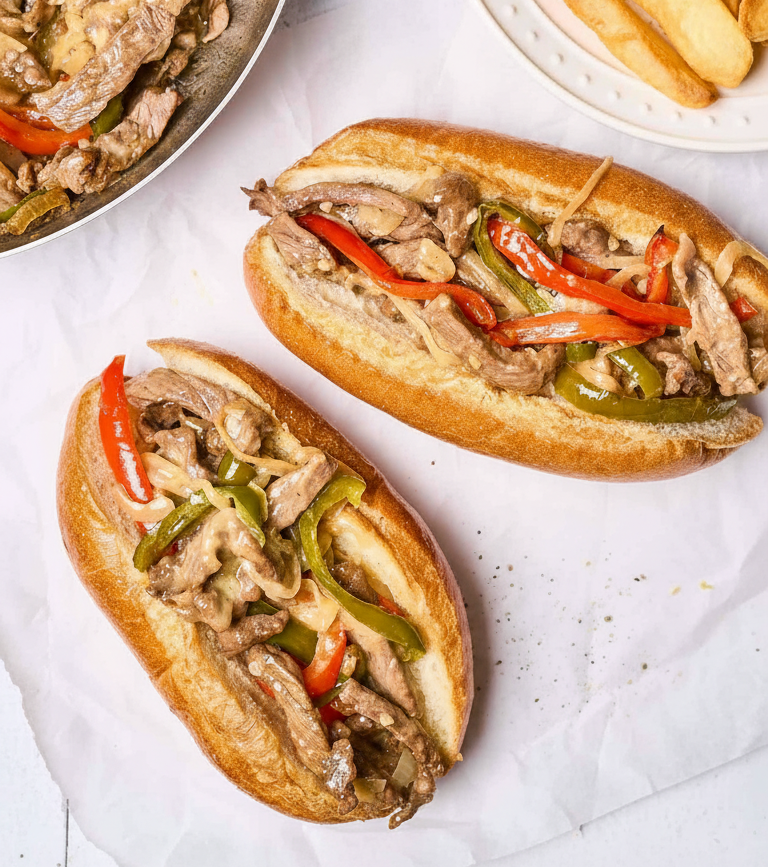
This Philly cheesesteak recipe will transform your weeknight dinners forever. There’s something magical about biting into a perfectly made Philly cheesesteak – tender ribbons of beef, melted cheese cascading over caramelized onions, all tucked into a toasted hoagie roll that’s crispy on the outside and soft on the inside. This iconic sandwich, born on the streets of Philadelphia in the 1930s, has become one of America’s most beloved comfort foods. And here’s the best part: you don’t need to travel to South Philly to experience an authentic cheesesteak.
I’ve spent months perfecting this Philly cheesesteak recipe, testing different cuts of beef, cheese combinations, and cooking techniques. After making over a dozen batches and getting honest feedback from my family (who never complained once, by the way), I’ve nailed down the exact method that delivers restaurant-quality results every single time. Whether you’re a first-timer or someone who’s made dozens of cheesesteaks before, this guide will walk you through everything you need to know.
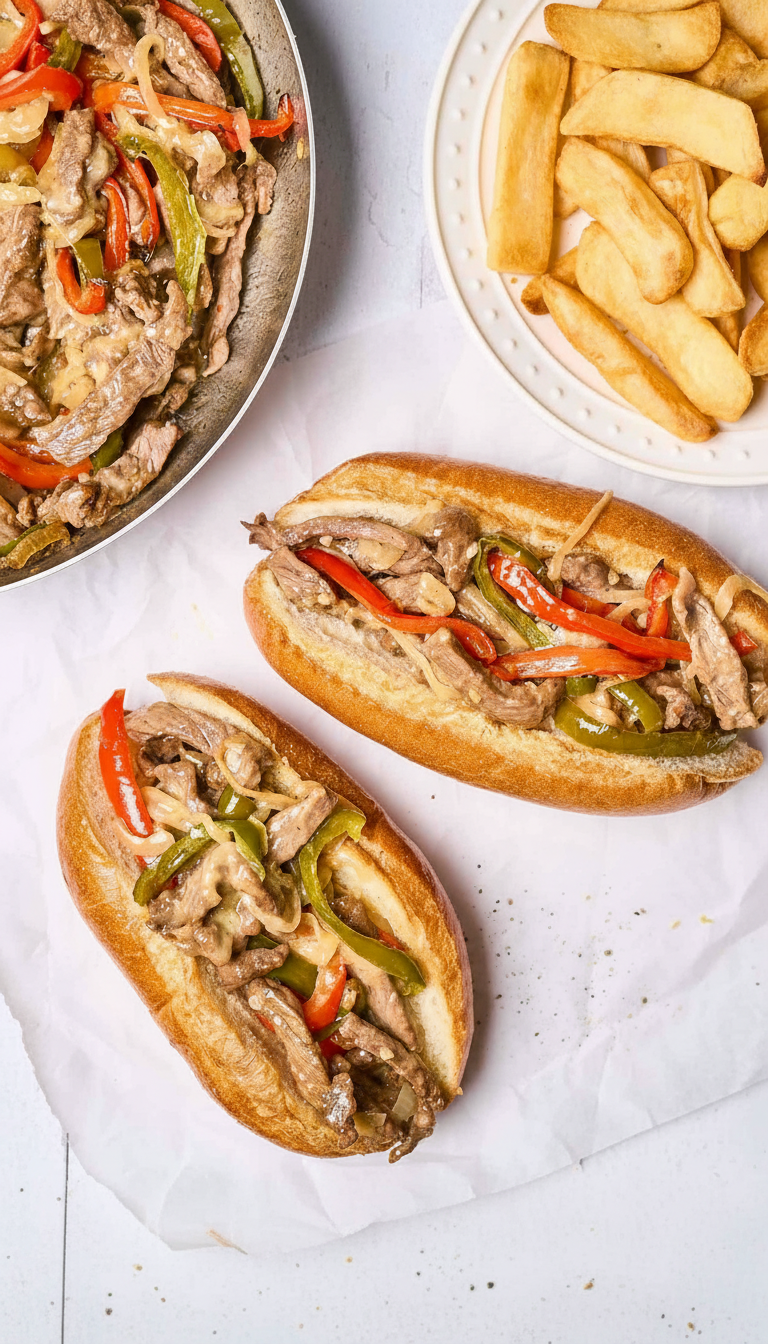
What Makes a Philly Cheesesteak Recipe Truly Authentic?
Let’s start with the basics of any great Philly cheesesteak recipe. An authentic version is surprisingly simple in its components, which is exactly what makes it so perfect. At its core, you need three essential elements: thinly sliced ribeye steak, cheese, and a proper hoagie roll. That’s it. The original cheesesteak, created by Pat Olivieri in 1930, didn’t even have cheese – that came later in the 1940s when someone had the brilliant idea to add it.
Now, here’s where things get interesting with this Philly cheesesteak recipe. Walk into any cheesesteak shop in Philadelphia, and you’ll notice they do things a certain way. The meat is sliced paper-thin – we’re talking almost translucent. It’s cooked on a flat-top griddle at high heat, often chopped up with spatulas as it sizzles. The onions are cooked until they’re sweet and slightly caramelized, not raw or overly crispy. The cheese is added at just the right moment so it melts into every crevice of the meat. And the roll? It’s always toasted, giving you that essential textural contrast.
But authenticity isn’t just about following rules blindly. It’s about understanding why these methods work. The thin slicing ensures the meat cooks in seconds, staying tender and juicy rather than tough and dry. The high heat creates those beautiful browned bits (what chefs call fond) that add incredible flavor. The toasted roll provides structural integrity – without it, your sandwich would turn into a soggy mess within minutes.
What is the Secret to a Good Philly Cheesesteak Recipe?
After making this Philly cheesesteak recipe countless times and studying techniques from various Philadelphia institutions, I’ve discovered that the secret isn’t just one thing – it’s a combination of several critical factors working in harmony.
First and foremost: the quality of your ingredients matters immensely. You cannot make a great cheesesteak with mediocre beef or stale bread. Start with well-marbled ribeye or top sirloin, fresh bakery rolls, and real cheese. Quality ingredients are your foundation for the best Philly cheesesteak recipe.
Second: the slicing technique is absolutely crucial. This is where most home cooks struggle with their Philly cheesesteak recipe. The meat needs to be sliced incredibly thin – ideally no thicker than 1/8 inch, but thinner is even better. Here’s a pro tip that changed everything for me: pop your steak in the freezer for 30-40 minutes before slicing. This firms up the meat just enough to make thin, even slices possible without a commercial meat slicer. The partially frozen meat acts almost like it’s been professionally shaved.
Third: high heat and quick cooking are non-negotiable. One of the biggest mistakes people make is cooking cheesesteak meat over medium or medium-low heat. You want your cooking surface screaming hot – whether that’s a cast iron skillet, a griddle, or a flat-top. This high heat sears the meat quickly, creating a beautiful caramelized crust while keeping the interior tender and juicy. Cook time should be 3-4 minutes maximum once the meat hits the pan.
Fourth: the fat content matters more than you think. Ribeye is the traditional choice for a reason – that marbling renders during cooking, basting the meat in its own juices and creating incredible flavor. If you’re using a leaner cut like sirloin (which is perfectly acceptable and more budget-friendly), add a little extra oil or butter to the pan to compensate for the lower fat content.
Fifth, and this is crucial: toasting the bread is mandatory. I cannot stress this enough when making this Philly cheesesteak recipe. A properly toasted hoagie roll does three things: it adds flavor through that golden-brown caramelization, it creates a barrier that prevents sogginess, and it provides textural contrast to the soft, juicy filling. Brush the cut sides with butter or garlic butter, then toast them cut-side down in a hot skillet or under the broiler until golden brown.
Finally, here’s a secret many home cooks overlook: the resting and assembly technique. Don’t just pile everything into the roll haphazardly. Layer the components thoughtfully – onions and peppers first (if using), then meat, then cheese on top while it’s still hot so it melts into everything. Some Philadelphia pros even fold the sandwich tightly and let it sit for 30 seconds, allowing all those flavors to meld together.
What is the Secret Ingredient in a Philly Cheesesteak Recipe?
Now we’re getting into the really fun stuff. While traditional versions of this Philly cheesesteak recipe are intentionally simple, there are a few “secret ingredients” that can take your sandwich from great to absolutely extraordinary.
Worcestershire sauce is probably the most commonly used secret weapon in any Philly cheesesteak recipe. Just a tablespoon or two added to the meat as it cooks provides a deep, umami-rich complexity that enhances the beef’s natural flavor without overpowering it. The savory, slightly tangy notes complement the richness of the cheese and meat beautifully. Worcestershire sauce adds that restaurant-quality depth of flavor.
Garlic – whether fresh, powdered, or roasted – is another game-changer that many Philadelphia shops use but don’t advertise. Some cooks season the meat with garlic powder. Others add fresh minced garlic to the onions as they sauté. The very best versions I’ve tasted use garlic butter on the bread, which adds an aromatic punch that elevates every bite of this Philly cheesesteak recipe.
Here’s one that might surprise you in this Philly cheesesteak recipe: a touch of baking soda in a marinade. This is a technique borrowed from Chinese restaurant cooking called “velveting.” When you toss thin-sliced beef with a mixture containing baking soda (along with seasonings like Worcestershire, vinegar, garlic, and a little sugar), then let it sit for just 20 minutes, something magical happens. The baking soda raises the pH on the meat’s surface, which helps it retain moisture during cooking and creates an incredibly tender texture.
Some creative cooks swear by adding a splash of beef broth to the meat as it finishes cooking. This adds moisture and deepens the beefy flavor in your Philly cheesesteak recipe. Others use a small amount of soy sauce for that umami boost, though this is definitely a departure from traditional preparation.
The real secret, though? Don’t overthink it. The beauty of a great Philly cheesesteak recipe is in its simplicity. Use quality ingredients, master the basic technique, and then add one or two special touches that speak to your personal taste.
Essential Ingredients for This Philly Cheesesteak Recipe
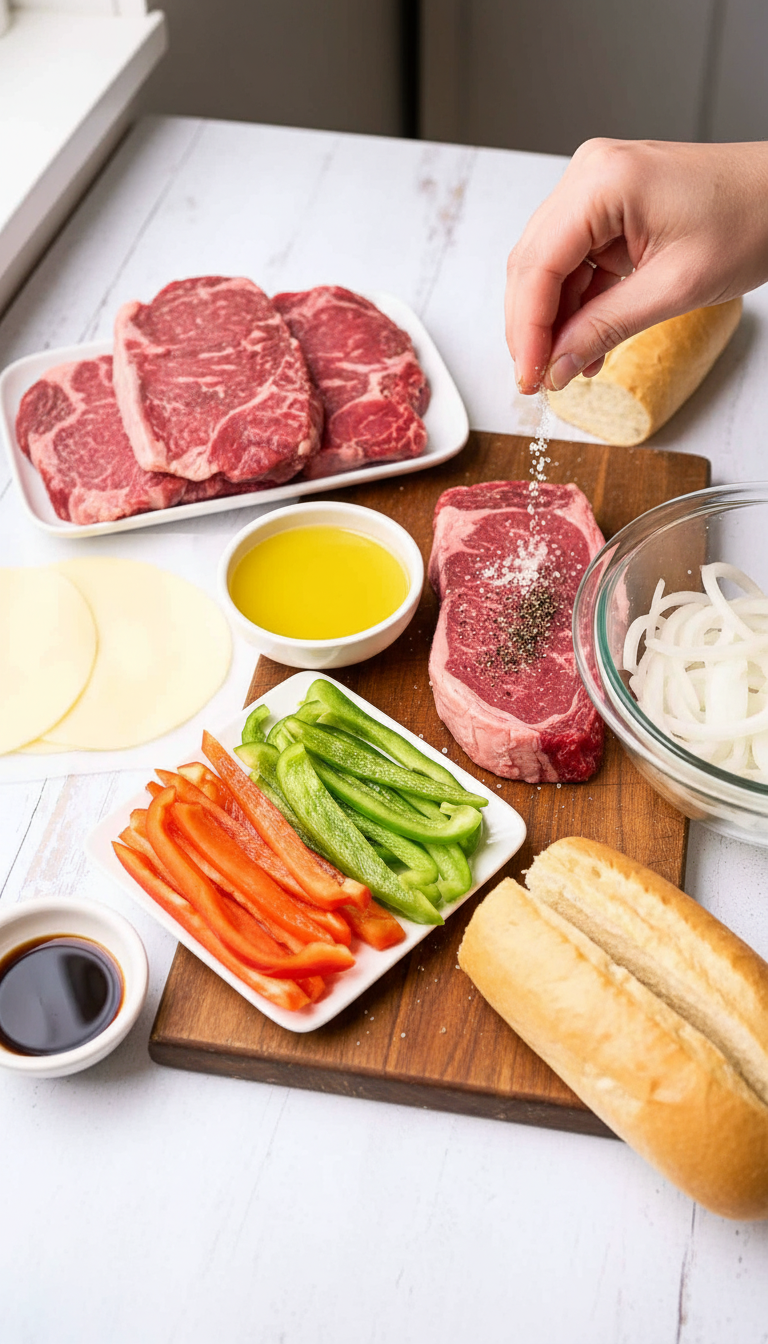
Let’s break down every component you’ll need for the perfect Philly cheesesteak recipe, and more importantly, why each ingredient matters.
The Beef for Your Philly Cheesesteak Recipe
Ribeye steak is the gold standard for any authentic Philly cheesesteak recipe. This cut comes from the rib section and features beautiful marbling throughout. When that fat renders during cooking, it keeps the meat incredibly juicy and flavorful. For a traditional cheesesteak, you’ll want 1.5 to 2 pounds of ribeye for 4 sandwiches. Yes, ribeye can be expensive, but the flavor and texture are unmatched.
Budget-friendly alternatives for your Philly cheesesteak recipe include top sirloin, sirloin tip, or even flank steak. These are leaner cuts, so they’ll be slightly less rich, but if you slice them properly and don’t overcook them, they work beautifully. Some cooks also use eye of round or top round, though these are the leanest and toughest options, so they benefit most from that baking soda tenderizing technique I mentioned earlier.
The Cheese
This is where passionate debates happen in any Philly cheesesteak recipe. The three classic choices are:
Provolone cheese – Mild, creamy, and melts beautifully. This is my personal favorite for its smooth texture and subtle flavor that doesn’t overpower the beef. Use 2-3 slices per sandwich.
American cheese – Melts into a smooth, creamy sauce-like consistency. It’s mild and kid-friendly. White American is more traditional in Philly.
Cheez Whiz – The most polarizing option. Locals will tell you this is touristy, but many authentic shops have been serving it since the 1950s.
The Vegetables
Onions are essential in this Philly cheesesteak recipe. Use yellow or sweet onions, thinly sliced. You’ll want 1-2 large onions for 4 sandwiches. They should be cooked until soft, sweet, and slightly caramelized – not raw or crunchy.
Bell peppers are optional and technically not part of an authentic version, but they’re incredibly popular outside of Philadelphia. If you love peppers like I do, check out my sautéed peppers and onions recipe for the perfect technique.
The Bread
This is critically important for your Philly cheesesteak recipe. You need a proper hoagie roll – sometimes called submarine rolls or hero rolls depending on where you live. The ideal roll should be:
- 8-10 inches long
- Soft and airy on the inside
- Lightly crusty on the outside
- Sturdy enough to hold all that juicy filling
In Philadelphia, Amoroso’s rolls are the traditional choice. Otherwise, look for fresh bakery rolls from your supermarket’s bakery section.
Should I Marinate Meat for a Philly Cheesesteak Recipe?
This is an excellent question about this Philly cheesesteak recipe, and the answer is: it depends on your goals and the cut of beef you’re using.
Traditional Philly cheesesteak recipes do not use marinated meat. In fact, 99% of authentic Philadelphia cheesesteak shops simply season the raw, thinly sliced ribeye with salt and pepper, then throw it directly onto a hot griddle. No marinade, no fuss. This is because high-quality ribeye is already tender and flavorful enough that it doesn’t need any help. The quick, high-heat cooking preserves the meat’s natural juices and creates those delicious caramelized bits.
However, marinating can be beneficial for your Philly cheesesteak recipe in certain situations:
If you’re using a tougher or leaner cut of beef (like top sirloin, flank steak, or round), a marinade can work wonders. The acids in ingredients like Worcestershire sauce, apple cider vinegar, or even balsamic vinegar help break down tough muscle fibers, making the meat more tender. A simple 30-minute to 2-hour marinade with olive oil, Worcestershire, garlic, salt, and pepper can significantly improve texture in your Philly cheesesteak recipe.
The baking soda method is technically a form of marinating for your Philly cheesesteak recipe, and it’s incredibly effective for tenderizing. Mix 1/2 tablespoon baking soda with 2 pounds of sliced beef, along with Worcestershire sauce, vinegar, garlic, onion powder, a touch of sugar, salt, and pepper. Let it sit for just 20 minutes. The baking soda changes the meat’s surface chemistry, helping it retain moisture and become remarkably tender.
My recommendation for this Philly cheesesteak recipe? If you’re using ribeye and you’re confident in your cooking technique, skip the marinade and keep it simple. Season generously with salt and pepper right before cooking. If you’re working with a budget cut or you want to experiment with deeper flavors, go ahead and marinate for 30 minutes to 2 hours.
One important note: if you do marinate, make sure to drain the meat well before cooking. Excess marinade in the pan will cause the meat to steam rather than sear, and you’ll miss out on that beautiful caramelization that makes this Philly cheesesteak recipe so delicious.
How to Make This Philly Cheesesteak Recipe: Step-by-Step
Now let’s put it all together. Here’s my foolproof method for creating this Philly cheesesteak recipe that rivals anything you’d find in Philadelphia.
Step 1: Prep Your Ingredients
Start by placing your ribeye steak in the freezer for 30-40 minutes. You want it firm but not frozen solid – this makes slicing much easier for your Philly cheesesteak recipe. While the meat is chilling, slice your onions and peppers (if using) thinly and set them aside.
Once the meat is properly chilled, use a sharp knife to slice it as thin as possible against the grain. We’re aiming for slices that are 1/8 inch thick or less. Season the sliced meat with salt, pepper, and garlic powder.
Step 2: Prepare the Bread
Slice your hoagie rolls lengthwise about three-quarters of the way through – you want them to open like a book but still be connected at the back. Mix softened butter with a bit of minced garlic or garlic powder. Spread this generously on the cut surfaces of the bread.
Step 3: Cook the Vegetables
Heat a large cast iron skillet or griddle over medium heat. Add 1-2 tablespoons of oil or butter. Once hot, add your sliced onions with a pinch of salt. Cook, stirring occasionally, for about 8-10 minutes until they’re soft, golden, and starting to caramelize. If you’re using peppers or mushrooms, add them during the last 3-4 minutes of cooking. Transfer the cooked vegetables to a bowl and set aside.
Step 4: Toast the Bread
Wipe out your skillet if there are any burnt bits, then place it over medium-low heat. Put your buttered rolls cut-side down in the skillet and toast for 2-3 minutes until golden brown and crispy. Set the toasted rolls aside.
Step 5: Cook the Meat
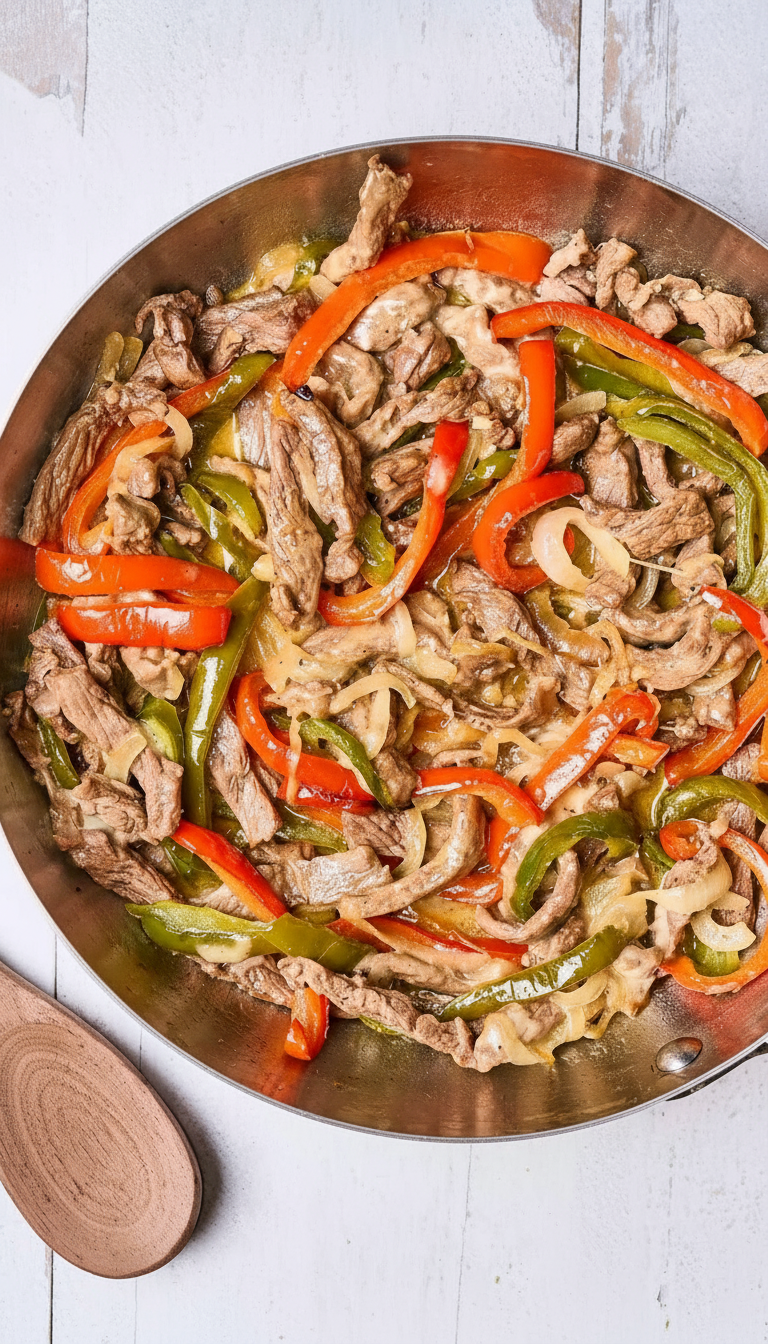
This is the most critical step in this Philly cheesesteak recipe. Increase your heat to high and add 1-2 tablespoons of oil to the skillet. Let it get really hot – almost smoking. Working in batches if necessary (don’t overcrowd the pan), add your seasoned beef in a single layer. Let it cook undisturbed for about 1-2 minutes to develop that gorgeous caramelized crust, then use a spatula to break it up and chop it as it cooks, just like they do on the griddles in Philly. The meat should be cooked through in 3-4 minutes total.
If you’re adding Worcestershire sauce to your Philly cheesesteak recipe, drizzle 1-2 tablespoons over the meat during the last minute of cooking. Toss everything together so the flavors combine.
Step 6: Combine and Melt the Cheese
Turn off the heat. Add your cooked onions and peppers back to the pan with the meat and toss everything together. Divide the meat mixture into 4 portions in the pan (this makes assembly easier). Lay 2-3 slices of provolone cheese over each portion. Cover the pan with a lid for about 1-2 minutes to let the cheese melt into the meat.
Step 7: Assemble Your Philly Cheesesteak Recipe
Using a large spatula, scoop each cheesy meat portion and transfer it directly into your toasted hoagie rolls. Wrap the sandwiches tightly in foil and let them sit for about 30 seconds. This steams the sandwich slightly and helps all the flavors meld together.
Serve immediately while everything is hot, gooey, and perfect.
Pro Tips for Philly Cheesesteak Recipe Excellence
Temperature control is everything in this Philly cheesesteak recipe. Your cooking surface should be properly preheated. If you add meat to a lukewarm pan, it’ll release moisture and steam rather than sear.
Don’t move the meat too quickly. Give it 30-60 seconds of undisturbed contact with the hot surface before you start chopping and stirring. This creates those flavorful browned bits.
Use two spatulas like the pros do. One holds the meat in place while the other chops it. This technique helps you work quickly and efficiently when making this Philly cheesesteak recipe.
If making multiple sandwiches, keep finished ones warm in a 200°F oven wrapped in foil while you finish cooking the rest.
For extra richness, add a pat of butter to the meat during the last 30 seconds of cooking.
Serving Suggestions for Your Philly Cheesesteak Recipe
This Philly cheesesteak recipe is substantial enough to be a complete meal, but the right sides make the experience even better. Classic french fries are the traditional accompaniment – go for crispy shoestring fries or thick-cut steak fries.
Onion rings add a satisfying crunch and complement the sandwich beautifully. Potato chips are another popular choice – they’re easy and provide great textural contrast.
For something lighter with your Philly cheesesteak recipe, consider coleslaw with a tangy vinegar-based dressing, or a simple green salad with a sharp vinaigrette to cut through the richness. Pickles – whether dill spears, bread and butter chips, or pickled hot peppers – add brightness and acidity that balances the fatty, cheesy sandwich.
Drinks? A cold beer is traditional, or go for a classic root beer or cola. The carbonation helps cleanse your palate between bites of this rich Philly cheesesteak recipe.
Storage and Reheating
Leftover filling from your Philly cheesesteak recipe (the meat, cheese, and veggie mixture) can be stored in an airtight container in the refrigerator for up to 3 days. Reheat in a skillet over medium heat until warmed through, adding a splash of beef broth if it seems dry.
For freezing, the meat mixture from this Philly cheesesteak recipe freezes beautifully for up to 3 months. Let it cool completely, then transfer to a freezer-safe container or bag. Thaw overnight in the refrigerator before reheating.
Never store assembled sandwiches – the bread will get soggy. Always store the filling separately and assemble fresh sandwiches when you’re ready to eat.
Variations of This Philly Cheesesteak Recipe to Try
Once you’ve mastered this classic Philly cheesesteak recipe, experiment with these delicious variations:
Pizza Steak – Top your Philly cheesesteak recipe with marinara sauce and mozzarella cheese instead of provolone Mushroom Swiss Cheesesteak – Use Swiss cheese and extra sautéed mushrooms in this Philly cheesesteak recipe Buffalo Chicken Cheesesteak – Substitute chicken for beef in this Philly cheesesteak recipe and toss with buffalo sauce Breakfast Cheesesteak – Add scrambled eggs to this Philly cheesesteak recipe and serve for breakfast or brunch.
Frequently Asked Questions About This Philly Cheesesteak Recipe
Q1: What cut of meat is best for a Philly cheesesteak recipe?
A: Ribeye steak is the traditional and best choice for any Philly cheesesteak recipe due to its marbling and tenderness. However, top sirloin, sirloin tip, or flank steak are excellent budget-friendly alternatives that work beautifully when sliced thin.
Q2: Can I make this Philly cheesesteak recipe without a meat slicer?
A: Absolutely! Place your steak in the freezer for 30-40 minutes until firm but not frozen solid. This makes it much easier to slice paper-thin with a sharp knife for your Philly cheesesteak recipe. Slice against the grain for maximum tenderness.
Q3: What’s the best cheese for a Philly cheesesteak recipe?
A: The three authentic options for any Philly cheesesteak recipe are provolone (mild and creamy), white American cheese (melts smoothly), or Cheez Whiz (traditional since the 1950s). Provolone is the most popular choice for home cooks.
Q4: Do real Philly cheesesteaks have peppers?
A: Traditional authentic versions of this Philly cheesesteak recipe only have steak, cheese, and onions. Bell peppers are a popular addition outside of Philadelphia but are not considered authentic by Philly purists.
Q5: Should I marinate the meat for this Philly cheesesteak recipe?
A: Traditional versions of this Philly cheesesteak recipe don’t use marinade – just salt and pepper. However, if you’re using a leaner or tougher cut of beef, marinating for 30 minutes to 2 hours with Worcestershire sauce, garlic, and vinegar can improve tenderness and flavor.
Q6: How do I keep my Philly cheesesteak recipe from getting soggy?
A: Always toast your hoagie rolls with butter before assembling your Philly cheesesteak recipe. The toasted, buttered surface creates a barrier that prevents the bread from absorbing too much moisture from the meat and cheese.
Q7: Can I make this Philly cheesesteak recipe ahead of time?
A: Cook the meat and vegetable filling from this Philly cheesesteak recipe ahead and store it in the refrigerator for up to 3 days. Reheat before assembling fresh sandwiches. Never store assembled sandwiches as the bread will get soggy.
Q8: What temperature should I cook the steak for this Philly cheesesteak recipe?
A: Use high heat when making this Philly cheesesteak recipe! Your skillet or griddle should be very hot (around 400-450°F) to quickly sear the meat and create caramelization. The meat should cook in just 3-4 minutes.
Q9: Can I freeze leftover filling from this Philly cheesesteak recipe?
A: Yes! The cooked meat and vegetable mixture from this Philly cheesesteak recipe freezes beautifully for up to 3 months. Store in an airtight container, thaw overnight in the fridge, and reheat in a skillet before serving.
Q10: What sides go well with this Philly cheesesteak recipe?
A: Classic pairings with this Philly cheesesteak recipe include french fries, onion rings, potato chips, coleslaw, or a simple green salad. The crispy or tangy sides balance the rich, cheesy sandwich perfectly.
There you have it – your complete guide to making this phenomenal Philly cheesesteak recipe at home! This recipe captures everything that makes this sandwich legendary: tender, flavorful meat, perfectly melted cheese, sweet caramelized onions, and that essential toasted roll that holds it all together. Whether you’re cooking for game day, a casual weeknight dinner, or just satisfying a serious craving, this Philly cheesesteak recipe delivers every single time. Trust the process, use quality ingredients, and don’t be afraid to make it your own. Happy cooking! 🥖🧀🥩
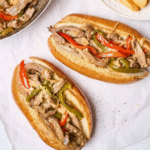
Philly Cheesesteak Recipe
Equipment
- Large cast iron skillet or griddle
- Sharp knife
- Cutting board
- Spatula
- Lid for skillet

[…] pickled red onions are the perfect topping for our Philly Cheesesteak Recipe. The acidity balances the richness of the melted cheese and beef […]